Flutter Career in 2026: Is It Worth Learning vs React Native?
Job market data, Google's commitment record, and a Flutter vs React Native vs KMP decision matrix from a team that hires and ships Flutter in production daily.
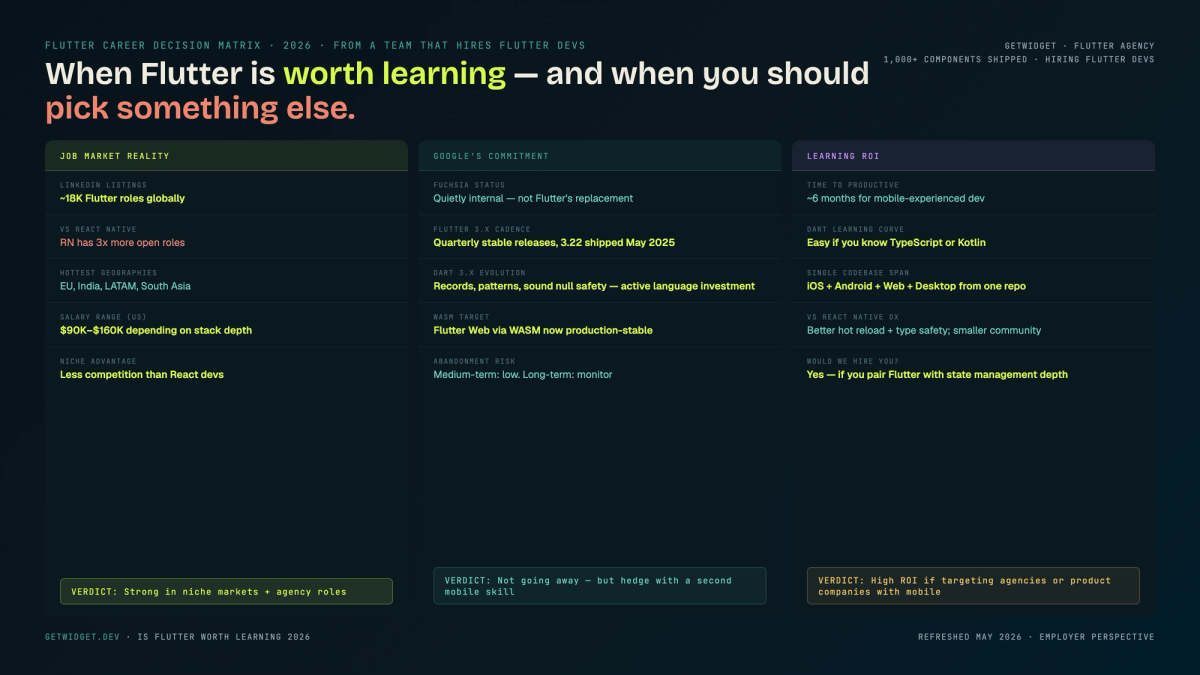
A Flutter career in 2026 is a different bet than it was in 2022. Flutter 3.x ships stable support for mobile, web, and desktop from a single Dart codebase. Our team has hired Flutter developers since 2019 and maintains the open-source GetWidget Flutter UI Kit, currently at 4,811 GitHub stars and 23K monthly pub.dev downloads. We've seen the job market mature from "experimental" to "production-default for cross-platform" — but Google's commitment, the React Native counter-pitch, and Kotlin Multiplatform's gains all factor into whether learning Flutter is the right call for you specifically.
Short answer: yes, Flutter is worth learning if you fit the right profile. But the honest answer is longer than that, and the "right profile" part matters.
Flutter career questions consistently pop up on Reddit, dev.to, and in our own DMs. "Will Google kill it?" "Is Dart a dead end?" "Should I learn React Native instead?" We have seen these questions from candidates and from clients asking us to staff their teams. This post gives you the framework we use internally, not a promotional pitch.
Is Flutter worth learning? The honest answer
Flutter has a clear use case: cross-platform native-like apps where you need pixel-perfect UI consistency, fast iteration across iOS and Android simultaneously, and a single engineering team rather than two. That use case is real and growing. It is not everything.
Flutter is not the dominant hiring target in mobile. React Native has a larger job pool in the United States. Flutter's hiring market skews toward agencies, startups doing cross-platform work, and product companies shipping in markets where Android fragmentation matters most (Southeast Asia, India, Africa). If you want to join a big-tech iOS team or a React-heavy organization, Flutter does not help you there.
But if you are an agency developer, a startup engineer, or someone building cross-platform products fast, Flutter is one of the most productive mobile toolchains available. We say that having shipped it in production across fintech, healthcare, e-commerce, and HR apps.
What Flutter does well: where the production benchmarks hold up
Flutter's rendering model is genuinely different from React Native's bridge-based approach. Flutter draws its own pixels via the Impeller engine (default on iOS since Flutter 3.10, rolling out on Android). It does not rely on native platform UI components. That means two things: your UI looks identical on iOS and Android, and you avoid the jank that used to come from the JavaScript bridge in React Native.
In our builds, we see Flutter consistently hitting 60fps on mid-range Android devices where React Native (pre-New Architecture) would drop frames under scroll load. The New Architecture in React Native closes that gap, but Flutter's performance ceiling is higher for custom animation-heavy UIs.
The widget model is also a practical advantage for team velocity. We maintain over 1,000 production Flutter components in the GetWidget UI Kit. The composable widget tree makes those components shareable, testable in isolation, and straightforward to version. If you want a catalog of what the widget system looks like at scale, our flutter widget catalog guide walks through the 12 widgets we trust in production builds.
The Google commitment question: what the Fuchsia situation actually means
"Will Google kill Flutter?" is the PAA question on every Flutter Reddit thread. Here is what we know rather than what we fear.
Google has killed developer products before: Stadia, Inbox, Google+, Allo. Flutter is different in one structural way: it shipped in production at Google before it was open-sourced. Google Pay uses it. Google Ads uses it. Multiple internal tools at Google run Flutter. Killing it would break internal Google products, not just external developers.
On Fuchsia: Google scaled back Fuchsia's consumer ambitions, but Flutter was never exclusively tied to Fuchsia. Flutter ran on Android and iOS years before Fuchsia had a public preview. The two projects are separate. Fuchsia's reduced scope does not change Flutter's roadmap.
Commit cadence is a better signal than announcements. The Flutter GitHub repo has seen consistent weekly commits, with stable releases roughly every quarter. The team shipped Flutter 3.19 (February 2024) with Impeller on Android graduating from opt-in to default on newer devices. That is not behavior that precedes a deprecation.
We watch the hireflutterdev market signal too. Our sister property hireflutterdev.com places Flutter developers with product companies and agencies. Inbound from hiring companies has not dipped. If Google's commitment were wobbling in a way the market could sense, we would see it in placement demand first.
Reasonable concern: Google has fewer Flutter advocates in senior engineering leadership than it did in 2020. That is true. It introduces some uncertainty about multi-year roadmap ambition. For a two-year career investment, it is a factor to weigh, not a reason to avoid Flutter entirely.
Flutter vs React Native vs Kotlin Multiplatform: the career decision
This is the comparison that actually matters for a career decision. The flutter vs react native 2026 debate has not changed dramatically from prior years, but Kotlin Multiplatform entering the conversation has. We will be direct about React Native's advantages because pretending they do not exist does not serve you.
| Feature | Flutter | React Native | Kotlin Multiplatform |
|---|---|---|---|
| Job market (US) | Mid-tier; strong at agencies and startups | Largest pool; especially at mid-size product companies | Growing but niche; mostly Android-first companies |
| Language | Dart (niche, easy to learn) | JavaScript/TypeScript (most devs already know it) | Kotlin (dominant on Android, growing on iOS) |
| Rendering | Own engine (Impeller); pixel-perfect cross-platform | Native components via bridge/JSI; more "native feel" | Shared logic, native UI per platform; best native fidelity |
| Cross-platform reach | iOS, Android, Web, Desktop (6 targets, one codebase) | iOS, Android, Web (experimental desktop) | iOS and Android primarily; desktop in progress |
| Learning curve entry | Medium; Dart takes 2-4 weeks to feel natural | Low for JS devs; bridge quirks take time to master | Medium-high; Kotlin/coroutines; iOS interop complexity |
| Best for | Agency builds, startups, design-heavy cross-platform | Teams with web background moving to mobile | Companies already on Android wanting iOS reach |
If you already know JavaScript or TypeScript and your goal is a job at a US product company, React Native is the more direct path. That is not a knock on Flutter. It is an honest reading of job posting data.
If you are in a market where agencies do cross-platform mobile work at scale, or if you want to work with clients shipping into Southeast Asia or India where Android fragmentation is severe, Flutter's rendering model and performance floor give you a real edge. That is where we see the most Flutter-specific hiring demand.
Flutter career prospects: what the job market actually looks like
Flutter developer salaries in the US range from $90K for a junior with six months' production experience to $160K+ at senior level with deep state management and performance optimization skills. That is broadly in line with React Native at equivalent seniority, though the total number of open Flutter roles is smaller.
Where Flutter roles concentrate: mobile-first agencies (they need one engineer to ship both platforms), funded startups pre-Series B that cannot staff two native teams, and companies with Android-first user bases expanding to iOS. Enterprise Flutter is growing in healthcare and logistics, largely because the desktop support lets a field app run on the same codebase as the tablet and phone versions.
The flutter future for freelancers looks strong. Cross-platform mobile projects are a growing slice of freelance and agency work. A Flutter developer who can deliver iOS and Android in the same timeline as a single-platform native developer is a cost win for small product companies. That pitch works.
Learning curve: what six months to productive actually means
"Six months to your first production Flutter app" is the number we tell candidates honestly. That is not six months of full-time study. It is six months with consistent part-time practice: a real project, not just tutorials.
The stages most Flutter developers go through: Dart basics (2-4 weeks), stateless and stateful widgets (2 weeks), state management (4-8 weeks, this is the hard part), navigation, async patterns, and then a real project with pub.dev dependencies, CI, and deployment. The widget tree model clicks quickly. State management is where most beginners stall. Riverpod or BLoC are the two state management patterns worth learning; pick one, go deep.
| Profile | Scenario | Verdict | |
|---|---|---|---|
| Career-changer with JS/TS background | Want US product company job | Start with React Native. Flutter later if agency work appeals. | |
| Career-changer with JS/TS background | Want agency or freelance mobile work | Learn Flutter. One-codebase pitch wins client budget conversations. | |
| Career-changer with JS/TS background | Building your own app side-project | Either works. Flutter has faster hot-reload for UI iteration. | |
| Startup engineer (small team, two platforms) | Team already on React/React Native | React Native keeps the JS context. Flutter switch has an upskilling cost. | |
| Startup engineer (small team, two platforms) | Greenfield mobile product, no existing stack | Flutter is the right call if UI quality and Android performance matter. | |
| Startup engineer (small team, two platforms) | Building for enterprise with desktop needs | Strong Flutter case. Desktop support is a differentiator here. | |
| Senior native (iOS or Android specialist) | Deep system-level or platform-specific work | Flutter adds overhead. Stay native. Flutter is not the right tool. | |
| Senior native (iOS or Android specialist) | Expanding reach to second platform at lower cost | Flutter works but Kotlin Multiplatform is a closer fit for your existing knowledge. | |
| Senior native (iOS or Android specialist) | Moving to a team lead / architect role | Flutter knowledge is valuable for cross-platform scope. Worth adding to your toolkit. |
If you are earlier in your career and still deciding whether mobile is the right direction, we have a full frontend developer roadmap that maps out the broader path from web to mobile to full-stack. Flutter fits in that journey, but it is not the only branch.
Our take: when we hire Flutter developers and when we do not
We hire Flutter developers for two types of work. First, for client projects that need cross-platform mobile shipped fast: a startup that cannot afford two native teams, or an enterprise that wants field apps on iOS, Android, and Windows tablet in one sprint cadence. Second, for GetWidget UI Kit contributions, where knowledge of the widget composition model is the job.
We do not hire Flutter developers for web-first work, API development, or projects where the client has an existing React Native codebase and wants continuity. Flutter is not the universal mobile answer, and we do not pretend it is when staffing a project.
What we look for in Flutter developer candidates: Riverpod or BLoC fluency (not just Provider), a shipped app on pub.dev or in the Play Store and App Store, and the ability to write platform channels for native integration. That last one filters out tutorial-only experience. If you have all three and can articulate why you chose Riverpod over BLoC on a specific project, you are ready for the market.
One more signal: we price our own Flutter consulting engagement starting with a $3K discovery audit before any development sprint. That audit exists because even experienced clients underestimate the platform channel work required to integrate device-native features. If you are learning Flutter, that is the area most worth adding to your portfolio.
90-day Flutter learning path: from zero to first shipped project
This is the path we would give a junior developer joining our team.
Days 1-30: Dart and the widget model
Dart syntax takes about a week to read fluently if you know any typed language. Focus on null safety, async/await, and the type system. Then go straight to Flutter: StatelessWidget, StatefulWidget, BuildContext, and the widget tree. Build a simple to-do app without tutorials. Break it. Fix it. The error messages in Flutter are unusually good once you learn to read them.
Days 31-60: state management and real data
Pick Riverpod. Learn it properly: providers, notifiers, AsyncNotifier for remote data. Build something that hits a real API, persists state, and handles loading and error states. This is the part most online courses skip. Do not skip it. A candidate who cannot debug a Riverpod provider during a code review will not make it past our technical screen.
Days 61-90: ship something real
Publish an app to the Play Store. Even a simple utility with 10 users. The deploy process, app signing, Play Console review, and App Store review cycle are all things you need to have done once before any employer trusts you on a real project. Get a CI setup with GitHub Actions. Add one platform channel for a device feature: push notifications, camera, or biometrics. That combination covers 80% of what freelance clients will ask you to build.
Will Google kill Flutter?
Not likely in the near term. Flutter runs internal Google products including Google Pay and Google Ads. It is not a side experiment. The commit cadence on GitHub is consistent, and stable releases ship quarterly. Fuchsia scaling back is unrelated to Flutter. We watch developer hiring demand as a real-world signal and it has not dropped. Treat this as a medium-confidence bet, not a sure thing.
Is Flutter still relevant?
Yes, for cross-platform mobile work. Flutter is relevant at agencies, startups, and in markets with Android fragmentation. It is less relevant if your goal is a pure-iOS or pure-Android role at a large tech company. Relevance depends on the type of work and team you are targeting.
Is Flutter harder than Python?
They are different tools for different problems. Python is general-purpose with minimal syntax overhead. Flutter is a UI framework that requires understanding a widget tree, state management, and a type-safe language (Dart). For complete beginners, Python is faster to get a first result. For developers coming from any typed language, Flutter's learning curve is manageable. Six to eight weeks of focused practice gets most people to a useful level.
Should I learn Flutter or React Native?
If you know JavaScript, React Native lets you apply existing skills immediately. If job market breadth in the US is your priority, React Native has more open roles. If you want cross-platform app work at an agency, design-heavy UI, or Android performance in fragmented markets, Flutter is the stronger choice. Both are worth knowing if you plan on mobile work long-term.
Is flutter worth learning as a career investment?
Yes, with the right target. Flutter career demand is concentrated at agencies, cross-platform startups, and international product companies. If you can ship a published app, demonstrate state management fluency, and write platform channels, you are hireable. The flutter future looks solid for freelance and agency contexts. Full-time FAANG-level Flutter roles are rare but growing.
Is Flutter worth it compared to Kotlin Multiplatform?
Kotlin Multiplatform shares logic across platforms but keeps native UI. Flutter shares both logic and UI. If you are coming from Android and want to expand to iOS, KMP is a shorter bridge. If you are building from scratch and UI consistency matters, Flutter's approach is more complete. For an agency or startup with no existing mobile code, Flutter ships faster because there is no native UI layer to maintain per platform.

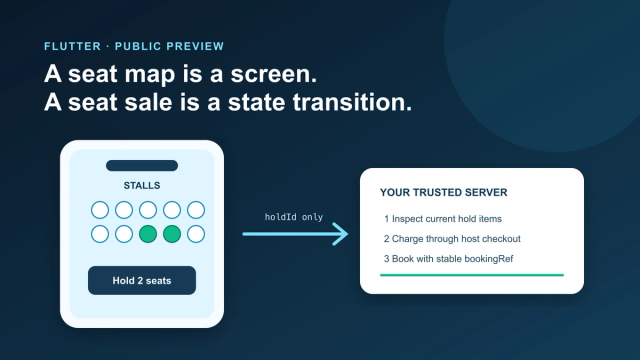
Add an Interactive Seat Map to Flutter: SDK, Holds, Checkout
Mount the public-preview SeatLayer SDK in Flutter, keep holds and payment server-side, and survive backgrounding, expiry, and 409 conflicts.
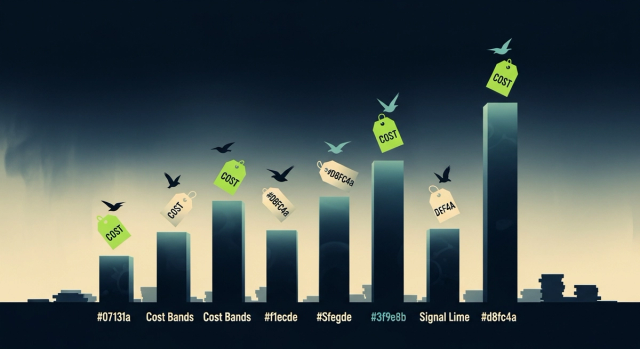
How Much Does It Cost to Hire a Flutter Developer in 2026? Rates, Salary Bands, and App Development Cost
How much does it cost to hire a Flutter developer? $15–$150/hr depending on region and seniority — breakdown by India, US, and Eastern Europe rates.
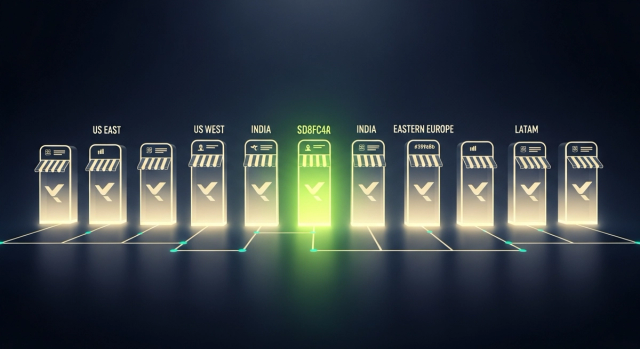
Top Flutter App Development Companies in 2026 — A Buyer's Shortlist (India + Global)
Top 10 Flutter app development companies in India (2026) — vetted by portfolio, scale, pricing, and Flutter delivery experience for production builds.

AI in Banking — Use Cases, Named Bank Precedents, and Eval Methodology (2026)
How AI is used in banking — fraud detection, credit scoring, customer service automation, RegTech, and the use cases banks are deploying right now.