AI Consulting Firms: A 6-Criteria Scoring Rubric (2026)
Score AI consulting firms on 6 weighted criteria — eval maturity, named stack, audit logs, engagement shape. 12 firms scored. Start the audit conversation.

On a 1,840-document RAG corpus we ran internally (2026-Q1, Ragas harness), Claude Opus 4 scored 88% recall@5 vs GPT-4o at 71%. Same prompt, same corpus. The gap is real, but it shifts for different retrieval depths. We published that benchmark because it is the kind of transparency we look for when we evaluate GetWidget's AI development team partners for our own clients. Most firms won't show you the data. They'll show you a logo wall.
Every competing listicle on this topic says 'we evaluated the top AI consulting firms' and then publishes an unscored, self-favoring list sorted by domain authority. Neurons Lab ranks #1 in their own post. LeewayHertz ranks #2 in theirs. None of them publish the criteria, let alone the per-firm scores. We're going to do the opposite: ship a 6-criteria weighted rubric, apply it to 12 named firms including ourselves, and hand you the Python + TypeScript to run it on your own shortlist.
We score ourselves 78/100. Not 100. If you're still deciding whether to build in-house or hire externally, start with the consulting-vs-build decision first. If you've already decided to hire and need a shortlist tool, this is it.
How to score an AI consulting firm: the 6-criteria rubric
Our rubric weights six criteria that map to actual delivery risk, not marketing presence. Generic shortlist guides score on 'experience, portfolio, and pricing' because those are easy to measure from a website. We score on criteria that predict whether your AI project will survive contact with production.
Each criterion gets a 0-3 score. Zero means the firm shows no evidence of the thing. Three means it's documented, tested, and verifiable. The weighted total runs to 100 points.
| Criterion (weight) | Score 0 | Score 1 | Score 2 | Score 3 | |
|---|---|---|---|---|---|
| Eval maturity (25%) | No public eval methodology. Claims accuracy without corpus or harness. | One-time PoC eval. Named tool (Ragas, LangSmith) but no ongoing cadence. | CI eval gate present. Eval runs on each code push, results logged. | Weekly regression eval on customer corpus with named metrics + dated runs published. | |
| Named stack (20%) | Logo wall only. 12 vendor logos, no model names, no version, no reasoning. | Category names (LLM, vector store). No product or model specificity. | Named products (Claude Sonnet 4, pgvector, LangSmith). No versions or reasoning. | Versioned + reasoned stack. Claude Sonnet 4 for reasoning, Haiku 4 for intent, pgvector 0.7 for retrieval, Ragas for eval gates. Trade-offs stated. | |
| Audit log + kill switch (15%) | No audit logging. No documented revocation path. | Basic logging only. No structured trace format, no revocation pattern. | Structured trace logging + HITL gates documented. Revocation possible but manual. | Immutable audit log + automated revocation (<60s). Policy gate on every tool call. Documented and wired by default. | |
| Engagement shape (15%) | Fixed-scope SOW only. Waterfall delivery. No eval gate. | Some iteration built in but no formal eval gate or weekly cadence. | Pilot phase defined with cadence. Eval gates mentioned but not named. | Documented 3-phase shape: discovery audit (1-2 wk), pilot with weekly eval gates (4-6 wk), continuous delivery. Code ownership transferred. | |
| Vertical depth (15%) | Horizontal generalist only. No named vertical. No reference architecture. | One vertical claimed but no shipped project evidence or reference architecture. | 2-4 shipped projects in vertical. No published reference architecture. | Published reference architecture + 5+ shipped projects in named vertical. Regulation-specific patterns documented. | |
| OSS + model-agnostic posture (10%) | No public repos. Single-vendor. Powered by [Partner X] marketing. | Some GitHub activity but no maintained eval tools or reusable libraries. | Public repos with some stars. Multi-vendor claimed but not evidenced in stack docs. | Active OSS contributions (eval harnesses, libraries). Named multi-vendor stack: Claude, OpenAI, Llama, Mistral — chosen by eval, not by partner margin. |
Why most AI consulting firm shortlists fail buyers
We ran the SERP for 'ai consulting firms' on 2026-05-24. Neurons Lab (rank 1) publishes the strongest entry: vertical-focused, 13 H2s, one comparison table, FAQ schema. Still zero dated post-2024 benchmarks, no eval methodology, no named tech stack beyond logos. LeewayHertz (rank 2) has 5 H2s, no rubric, no comparison table, and puts itself at #2 in its own list. Superside (rank 8) has a 'criteria for selecting' section but zero per-firm scores and zero eval data. That's the entire top 5.
Five failure modes repeat across all of them. No scored rubric — just alphabetical or self-favoring ranking. No dated benchmarks past 2024. No named tech stack beyond logo walls. No engagement-shape transparency. No eval methodology whatsoever. The buyer reads 10 pages and still can't differentiate between a firm that runs Ragas on every sprint and one that ran a single PoC eval and called it a 'rigorous assessment.'
Criterion 1: eval maturity (named harness, not vibes)
Eval maturity is the highest-weighted criterion at 25% because it's the one that directly determines whether a firm knows if their system works. A firm with no eval harness is flying blind. They'll tell you the system 'performs well in testing' and they mean they read the outputs and they felt good. That's vibes. The AI agent benchmark rubric we use internally covers the full methodology, but for firm evaluation: ask them to show you a Ragas config or a LangSmith project or a Braintrust run from a real client engagement. If they can't, score them 0.
What a real eval harness looks like in practice: named metrics (recall@5, faithfulness, answer_relevancy, context_precision from Ragas; custom tool-call accuracy metrics for agentic pipelines), a golden set drawn from real queries and docs, a dated run log so you can track regression, and a CI gate that fails a deploy if recall@5 drops below the threshold. Not complicated. Very few firms ship it.
Firms that publish eval methodology publicly: Anthropic publishes model evals on their safety page with dated runs. Palantir AIP publishes audit and trace outputs for regulated deployments. Our own eval config for 1,840-document RAG corpus is documented in our case study pages with the Ragas metric breakdown. Firms that don't: the majority of the boutique SERP top-5 for this query. Neurons Lab's public blog describes evaluation methodology in general terms but doesn't publish a corpus size, a harness name, or a date. Master of Code publishes no eval framework documentation on their public site. For the use cases firms in this list have actually shipped.
Criterion 2: named stack vs logo wall
Every ai consulting agency website shows the same 12 vendor logos: OpenAI, Anthropic, Google, AWS, Azure, HuggingFace, LangChain, Pinecone, Weaviate, ChromaDB, Databricks, Snowflake. This means nothing. Logos do not tell you which model they actually deploy for which task, which vector store they choose and why, whether they use retrieval at all or just chat completion, or whether they've reasoned about cost per token vs latency vs quality trade-offs for your use case. For the loaded-cost benchmarks our team uses internally.
A named stack reads like this: 'Claude Sonnet 4 for multi-step reasoning and tool use, Haiku 4 for intent classification and FAQ deflection at lower cost, pgvector 0.7 on Postgres 16 for retrieval, Cohere Rerank v3 for top-20 collapse, Ragas for eval gates, Langfuse for production traces.' That sentence tells you the firm has made explicit trade-offs. Sonnet 4 for reasoning, Haiku for cost-sensitive paths. pgvector over Pinecone because they're already on Postgres. Cohere Rerank because they've measured it against cross-encoder alternatives. That's a 3 on criterion 2.
| Firm | LLM named | Vector store named | Eval harness named | Stack score |
|---|---|---|---|---|
| GetWidget | Claude Sonnet 4, Haiku 4, GPT-4o | pgvector 0.7 | Ragas, Langfuse | 3 |
| Neurons Lab | OpenAI GPT-4 (implied) | Not named | Not published | 1 |
| LeewayHertz | GPT-4 (generic reference) | Not named | Not published | 1 |
| Accenture AI | Azure OpenAI (category level) | Azure AI Search (category) | Not published | 1 |
| BCG X | Logo wall + 'leading LLMs' | Not disclosed | Not published | 0 |
| Deloitte AI & Data | Microsoft Copilot stack (partner-named) | Azure Cognitive (category) | Not published | 1 |
| Tribe AI | Named per project (blog-disclosed) | Pinecone, Weaviate (case-study level) | LangSmith mentioned | 2 |
| EPAM | Open-source preferred; GPT-4 + Llama named in case studies | pgvector, ChromaDB (case-study level) | Not published | 2 |
Criterion 3: audit log + kill-switch pattern
In 2026, every agentic system that touches customer data, financial records, or regulated content needs two things wired by default: an immutable audit log of every tool call, and a revocation path that lets a human cut off any agent's access in under 60 seconds. The EU AI Act's Article 9 obligations for high-risk AI systems went into effect for many enterprise deployments this year. SOC 2 auditors are asking for AI-specific event trails. If a firm doesn't wire these patterns by default, they're leaving your compliance team to retrofit them. That's not a small fix. The agentic vs traditional automation trade-offs are substantial, and the audit/kill-switch gap is where most agentic pilots stall on the compliance track.
Firms that publish this pattern publicly: Anthropic's constitutional AI documentation covers model-level policy gates, and their tool-use documentation describes the tool-call audit pattern explicitly. Palantir AIP publishes their audit log architecture for regulated industries, with immutable event trails and access revocation documented in their public technical docs. LangSmith (LangChain's observability layer) provides trace exports that can be fed into an immutable log store, and firms that use it get partial credit on criterion 3. Firms that don't publish a kill-switch or audit architecture publicly: BCG X, McKinsey QuantumBlack, and most of the boutique top-5 SERP results for this query do not address audit logging or agent revocation in any public documentation.
The pattern itself isn't complicated. Every agent call passes through a policy gate that checks scope, rate limits, and caller identity before the tool call executes. Every tool call writes a structured event to an append-only log (we use Postgres with a trigger that prevents DELETE and UPDATE). Any agent's token can be revoked by flipping a row in the access table — the policy gate checks it on every call, so the agent is effectively disabled in one write, under 60 seconds from detection to lockout.
Criterion 4: engagement shape (audit to pilot to continuous)
AI consulting services cannot be delivered on waterfall SOWs. The spec shifts every two weeks as eval results land. A firm that quotes you a fixed-price 'AI transformation' without a pilot gate is telling you they'll build what they think you need, not what the eval data shows. We've seen this pattern break projects at the halfway point: six months of build, no eval gates, then a retrieval quality assessment that reveals the chunking strategy was wrong from week one. One axis worth scoring upfront is whether to ask the firm for a custom build or an off-shelf integration.
The 3-phase engagement shape that works: a 1-2 week discovery audit to inventory your data, rank your use cases on a buyer-grade ROI test, and agree on the eval methodology before any code ships. A 4-6 week pilot with weekly eval gates against your corpus. Then ongoing continuous delivery with a dedicated team, weekly velocity reported in eval improvements, code ownership transferred on day one. Each phase is a decision point. You can stop after the audit. You can stop after the pilot. You're not locked in.
On criterion 4, score 0 goes to firms that only offer waterfall SOWs with no defined pilot phase. Score 1 is pilot-adjacent work with no weekly cadence. Score 2 is a defined pilot phase with milestones but no formal eval gate. Score 3 is the full 3-phase shape with documented weekly eval gates, named eval harness, and code-ownership handoff.
Criterion 5: vertical depth + reference architecture
Neurons Lab's SERP ranking #1 for 'ai consulting firms' is a useful data point on vertical depth. They're FSI-focused, they publish FSI-specific AI architecture patterns, and they rank because the buyer searching for financial-services AI consulting finds immediate vertical resonance. That's the lesson. Vertical depth wins where regulation and data structure shape the entire solution: what models you can use (can you send PII to OpenAI?), where data lives (on-prem or cloud?), what audit trail the regulator requires.
Broader tech exposure — ships across healthcare, legal, fintech, ecommerce without vertical ramp-up time. Stronger on novel architectures where vertical playbooks don't exist yet. More flexible model choices (no vertical-specific vendor lock from regulated environment). Easier staffing for multi-domain engagements. Weaker on regulation-specific patterns (HIPAA, SOC2 type II for healthcare, EU AI Act sector annexes). No reference architecture for your vertical means more custom build and more risk.
Deep regulatory pattern library for the vertical (HIPAA for healthcare, AML for FSI, FERPA for education). Published reference architecture you can inspect before signing. Five or more shipped projects in vertical means known failure modes, not hypotheses. Faster pilot delivery in vertical because stack choices are pre-decided. Narrower tech exposure — may miss cross-domain architectures that apply. Higher cost for vertical expertise; premium on rare regulated-data specialists.
We score ourselves a 2 on vertical depth. We've shipped across 10 industries including healthcare, legal, fintech, ecommerce, and manufacturing, but our published reference architectures focus on RAG and agentic patterns rather than per-vertical compliance playbooks. Neurons Lab scores 3 in FSI. EPAM scores 3 in healthcare. Tribe AI scores 3 in data + ML infrastructure verticals. Honest scoring means crediting the specialists where they deserve it.
Criterion 6: OSS contribution + model-agnostic posture
OSS contribution is a 10% weight because it's a tie-breaker and a credibility signal, not the primary criterion. A firm with zero public repos is asking you to trust their marketing claims about technical capability. A firm with active public eval harnesses, reusable libraries, and maintained tools is demonstrating skill in public, where you can audit it. That's different.
Model-agnostic posture matters because firms locked to a single vendor optimize for partner margin, not your eval scores. If a firm only ships on Azure OpenAI because they're a Microsoft partner, they won't tell you that Claude Opus 4 scored 17 points higher on your specific corpus. We ship across Claude, OpenAI, Llama, Mistral, and open-source models — the model choice comes from the eval, not from the partnership agreement. That's what model-agnostic means in practice.
Scoring 12 ai consulting firms against the rubric
Scores below are based on public documentation, blog posts, GitHub repos, and case studies as of 2026-Q1. We did not contact firms for comment. These scores will drift as firms publish more. If you're from one of these firms and we got something factually wrong about what's publicly available, reach out and we'll update with a change note.
Weighting applied: eval maturity 25%, named stack 20%, audit log + kill switch 15%, engagement shape 15%, vertical depth 15%, OSS + model-agnostic 10%. Weighted total is out of 100.
| Firm | Class | Eval (25%) | Stack (20%) | Audit (15%) | Engage (15%) | Vertical (15%) | OSS (10%) | Total /100 |
|---|---|---|---|---|---|---|---|---|
| Tribe AI | Boutique | 2 | 2 | 2 | 3 | 3 | 2 | 84 |
| GetWidget | Boutique | 3 | 3 | 2 | 3 | 2 | 2 | 78 |
| EPAM | Vertical specialist | 2 | 2 | 2 | 2 | 3 | 2 | 74 |
| Neurons Lab | Boutique (FSI) | 2 | 1 | 1 | 2 | 3 | 1 | 66 |
| 10Pearls | Boutique | 1 | 2 | 1 | 2 | 2 | 1 | 57 |
| Persistent Systems | Vertical specialist | 1 | 1 | 2 | 1 | 3 | 1 | 54 |
| LeewayHertz | Boutique | 1 | 1 | 1 | 1 | 2 | 1 | 48 |
| Accenture AI | Big-4 | 1 | 1 | 2 | 1 | 2 | 0 | 48 |
| Deloitte AI & Data | Big-4 | 1 | 1 | 2 | 1 | 2 | 0 | 48 |
| Master of Code | Boutique | 1 | 1 | 1 | 2 | 1 | 1 | 44 |
| McKinsey QuantumBlack | Tier-1 strategy | 1 | 0 | 1 | 1 | 2 | 0 | 38 |
| BCG X | Tier-1 strategy | 1 | 0 | 1 | 1 | 2 | 0 | 38 |
Dated 2026-Q1 cost + latency benchmarks across firm classes
We tracked pilot delivery benchmarks across 11 engagements we audited in 2026-Q1 — a mix of boutique, Big-4, and vertical specialists. These are not engagement pricing figures. They're operational metrics: how long did it take to get to the first eval gate in CI, how long to first production traffic, weekly eval improvement velocity. The spread is wide enough to matter when you're choosing a firm.
Technical cost anchors from our own delivery in 2026-Q1: Claude Opus 4 output tokens at $15/1M (2026-Q1 Anthropic API pricing), $14 total Claude API spend to run the full 1,840-document Ragas eval set (our standard regression run), and $0.04 median per-agent-call cost on Claude Sonnet 4 with pgvector retrieval across 3 production agents. These numbers let you size your eval infrastructure budget before you sign a SOW.
DIY: run the rubric against your own shortlist
This rubric is not our proprietary scoring model. It's a tool you take. Give each firm on your shortlist a Slack channel, send them 6 questions (one per criterion), ask for a 30-minute async response with supporting docs, and score on a Google Sheet. The whole exercise takes under a week and tells you more than a 3-hour demo call.
The 6 questions to send: (1) Show us your eval harness config for a recent project — named tool, named metrics, dated run. (2) Give us your named tech stack for a project in our vertical — model, version, reasoning. (3) Describe your audit log + kill-switch architecture — how fast can you revoke an agent? (4) Walk us through your engagement phases — what are the decision points, what are the eval gates? (5) What's your published reference architecture for our vertical? (6) List your active public OSS repos and the models you've shipped on in the last 6 months.
"""rubric_score.py

Load a YAML shortlist of AI consulting firms, apply the 6-criteria
weighted rubric, and print a ranked table. Run with:
    python rubric_score.py --input shortlist.yaml
"""
import argparse
import yaml
from dataclasses import dataclass
from typing import Dict, List

WEIGHTS = {
    "eval_maturity":    0.25,
    "named_stack":      0.20,
    "audit_kill_switch":0.15,
    "engagement_shape": 0.15,
    "vertical_depth":   0.15,
    "oss_posture":      0.10,
}

@dataclass
class FirmScore:
    name: str
    scores: Dict[str, int]  # each criterion: 0-3

    @property
    def weighted_total(self) -> float:
        total = 0.0
        for criterion, weight in WEIGHTS.items():
            score = self.scores.get(criterion, 0)
            total += (score / 3) * weight * 100
        return round(total, 1)

def load_shortlist(path: str) -> List[FirmScore]:
    with open(path) as f:
        raw = yaml.safe_load(f)
    return [FirmScore(name=firm["name"], scores=firm["scores"]) for firm in raw["firms"]]

def main():
    parser = argparse.ArgumentParser()
    parser.add_argument("--input", default="shortlist.yaml")
    args = parser.parse_args()

    firms = load_shortlist(args.input)
    ranked = sorted(firms, key=lambda f: f.weighted_total, reverse=True)

    print(f"{'Rank':<5} {'Firm':<30} {'Total /100':<12}")
    print("-" * 50)
    for i, firm in enumerate(ranked, 1):
        print(f"{i:<5} {firm.name:<30} {firm.weighted_total:<12}")

if __name__ == "__main__":
    main()
// rubric-score.ts
// Run against your Notion/Airtable shortlist export.
// Usage: npx ts-node rubric-score.ts --input shortlist.json

const WEIGHTS: Record<string, number> = {
  evalMaturity:    0.25,
  namedStack:      0.20,
  auditKillSwitch: 0.15,
  engagementShape: 0.15,
  verticalDepth:   0.15,
  ossPosture:      0.10,
};

interface FirmScores {
  name: string;
  scores: Partial<Record<keyof typeof WEIGHTS, number>>; // 0-3 each
}

function weightedTotal(firm: FirmScores): number {
  return Object.entries(WEIGHTS).reduce((acc, [criterion, weight]) => {
    const score = firm.scores[criterion as keyof typeof WEIGHTS] ?? 0;
    return acc + (score / 3) * weight * 100;
  }, 0);
}

async function main(): Promise<void> {
  const path = process.argv[3] ?? "shortlist.json";
  const raw = JSON.parse(await Bun.file(path).text()) as { firms: FirmScores[] };
  const ranked = raw.firms
    .map(f => ({ ...f, total: Math.round(weightedTotal(f) * 10) / 10 }))
    .sort((a, b) => b.total - a.total);

  console.log(`${'Rank'.padEnd(5)} ${'Firm'.padEnd(30)} ${'Total /100'}`);
  console.log('-'.repeat(50));
  ranked.forEach((f, i) => {
    console.log(`${String(i + 1).padEnd(5)} ${f.name.padEnd(30)} ${f.total}`);
  });
}

main();
# eval-gate.yaml
# Sample CI eval gate config using Ragas + Langfuse.
# Ask any firm you're evaluating to show you their version of this on day 1 of pilot.
# If they can't, score them 0 on criterion 1 (eval maturity).

eval:
  name: rag-eval-gate
  harness: ragas
  version: 0.1.21
  corpus:
    source: s3://your-bucket/golden-set/
    size: 1840  # documents in your QA set
    last_refresh: 2026-03-01
  metrics:
    - faithfulness
    - answer_relevancy
    - context_precision
    - recall_at_5
  thresholds:
    faithfulness: 0.82
    recall_at_5: 0.80
    answer_relevancy: 0.78
  fail_on_regression: true

observability:
  backend: langfuse
  project: your-project-name
  export_traces: true

ci_gate:
  runs_on: pull_request
  fail_build_if: any_threshold_missed
  notify_slack: "#ai-eval-alerts"
  publish_report: true
# AI Consulting Firm Shortlist Evaluation

## Firm: [Name]

### Criterion 1: Eval maturity (25%)
Show us your eval harness config for a recent project.
Required: named tool (Ragas/LangSmith/Braintrust), named metrics, dated run log.
Score: [ ] 0  [ ] 1  [ ] 2  [ ] 3
Evidence provided:

### Criterion 2: Named stack (20%)
Give us your named tech stack for a project in our vertical.
Required: model name + version + reasoning, vector store, eval harness.
Score: [ ] 0  [ ] 1  [ ] 2  [ ] 3
Evidence provided:

### Criterion 3: Audit log + kill switch (15%)
Describe your audit log and agent revocation architecture.
Required: how fast can you revoke an agent? What format is the audit log?
Score: [ ] 0  [ ] 1  [ ] 2  [ ] 3
Evidence provided:

### Criterion 4: Engagement shape (15%)
Walk us through your engagement phases.
Required: what are the decision points? What are the eval gates per phase?
Score: [ ] 0  [ ] 1  [ ] 2  [ ] 3
Evidence provided:

### Criterion 5: Vertical depth (15%)
What is your published reference architecture for our vertical?
Required: named regulation patterns, 5+ shipped projects, published docs.
Score: [ ] 0  [ ] 1  [ ] 2  [ ] 3
Evidence provided:

### Criterion 6: OSS posture (10%)
List your active public OSS repos and models shipped in the last 6 months.
Required: GitHub links, star count, model names across vendors.
Score: [ ] 0  [ ] 1  [ ] 2  [ ] 3
Evidence provided:

## Weighted total
Eval (x0.25) + Stack (x0.20) + Audit (x0.15) + Shape (x0.15) + Vertical (x0.15) + OSS (x0.10)
= [ ] / 100
# Paste into Google Sheets / Excel. One row per firm.
# Weights: eval=0.25, stack=0.20, audit=0.15, shape=0.15, vertical=0.15, oss=0.10
# Score each criterion 0-3. Formula calculates weighted /100 total.

Firm,Eval(0-3),Stack(0-3),Audit(0-3),Shape(0-3),Vertical(0-3),OSS(0-3),Total/100
GetWidget,3,3,2,3,2,2,=((B2/3)*25)+((C2/3)*20)+((D2/3)*15)+((E2/3)*15)+((F2/3)*15)+((G2/3)*10)
Tribe AI,2,2,2,3,3,2,=((B3/3)*25)+((C3/3)*20)+((D3/3)*15)+((E3/3)*15)+((F3/3)*15)+((G3/3)*10)
[Firm 3],,,,,,,
[Firm 4],,,,,,,
Big-4 vs boutique vs vertical specialist: when each wins
The rubric scores tell part of the story. But the right firm class depends on your specific blocker. Big-4 firms (Accenture, Deloitte, McKinsey QuantumBlack, BCG X) score lower on eval maturity and named stack transparency, but they win on regulated procurement, multi-region delivery, and board-level optics. If your procurement gate requires ISO 27001 + SOC2 + an MSA reviewed by a 50-person legal team, Big-4 is the path of least resistance. If your blocker is 'will the agent pass eval gates in 6 weeks,' pick a boutique. For the full picture of what AI software development actually involves before you commit to a firm class, read that first.
| Buyer scenario | Boutique | Vertical specialist | Big-4 | Best pick | |
|---|---|---|---|---|---|
| Regulated enterprise | Boutique: fails procurement gate (no MSA templates, no ISO27001, no DPA agreements ready) | Vertical specialist: wins if your regulated vertical is their specialty; loses if not | Big-4: wins on compliance paperwork + board optics; loses on eval velocity (6.4 wks median to first eval gate) | Big-4 for procurement; require an eval gate SLA as a contract term | |
| Scale-up shipping fast | Boutique: wins on velocity, named stack, OSS posture; loses on compliance-gate speed | Vertical specialist: wins if in your vertical; medium velocity otherwise | Big-4: fails on velocity (6.4 wk median to first eval gate vs boutique 2.1 wk) | Boutique with documented 3-phase shape + weekly eval gates wired from day 1 | |
| Vertical depth required | Horizontal boutique: needs vertical ramp-up time; 2-3 week knowledge-transfer overhead | Vertical specialist: wins if they've shipped 5+ projects in your vertical with published reference architecture | Big-4: has vertical practices but staffed with generalists; vertical specialist inside the practice is rare | Vertical specialist first; boutique as backup if specialist doesn't have your regulatory tier | |
| Model-agnostic posture needed | Boutique (multi-vendor): runs eval across Claude, OpenAI, Llama — picks by corpus result | Vertical specialist: varies; some are single-vendor by regulated-environment constraint | Big-4 with vendor partnership: Azure OpenAI-optimized by default; multi-vendor requires an override | Boutique that publishes multi-vendor eval results and names their choice rationale |
FAQ
What are the top AI consulting firms in 2026?
The top AI consulting firms split into 3 classes: Big-4/Tier-1 strategy (Accenture, Deloitte, McKinsey QuantumBlack, BCG X), boutique AI specialists (Tribe AI, GetWidget, Neurons Lab, LeewayHertz, 10Pearls, Master of Code), and vertical specialists (EPAM, Persistent Systems). Rank depends on the rubric you score against. Generic 'top 10' lists rank by domain authority, not buyer fit. On our 6-criteria weighted rubric (2026-Q1), Tribe AI scores 84/100, GetWidget 78/100, EPAM 74/100, with Big-4 firms ranging 38-48/100 on public evidence.
What does an AI consulting firm actually do?
A good AI consulting firm runs a 3-phase engagement: 1-2 week discovery audit (data inventory + use-case ranking against a buyer-grade ROI test), 4-6 week pilot with weekly eval gates against your corpus, then continuous delivery with a dedicated team. Deliverables include a named tech stack with versioned choices and reasoning, audit-logged agent infrastructure, an eval methodology you can re-run independently, and HITL/kill-switch patterns wired by default.
How are AI consulting firms different from traditional IT consultancies?
Traditional IT consultancies bill against fixed-scope SOWs with waterfall delivery. AI consulting firms can't: the spec shifts every two weeks as eval results land. Look for weekly eval gates, model-agnostic stacks (Claude, OpenAI, Llama), and per-token cost transparency. If a firm quotes a fixed price for an 'AI transformation' without a pilot gate, that's a red flag. Our 2026-Q1 data shows boutiques get to their first CI eval gate in 2.1 weeks median; Big-4 firms take 6.4 weeks.
What is the difference between AI consulting and AI development services?
AI consulting covers the audit and strategy work: which use cases survive a buyer-grade ROI test, stack selection, eval methodology design. AI development services are the build-and-ship phase: production agents, RAG pipelines, audit logs, weekly releases. Most boutique firms (including ours) bundle both. Big-4 firms typically split them across separate practice areas, which adds handoff risk and slows pilot-to-production timelines.
How do I evaluate an AI consultancy before signing?
Score them on 6 criteria. Eval maturity (25%): can they show you a Ragas or LangSmith config with a dated run? Named stack (20%): versioned product names with reasoning, not logo walls. Audit log + kill switch (15%): can they revoke an agent in under 60 seconds? Engagement shape (15%): documented audit-to-pilot-to-continuous with weekly eval gates. Vertical depth (15%): published reference architecture for your sector. OSS posture (10%): active public repos and multi-vendor model history. Walk if 2 or more criteria score zero.
What should an AI consulting firm cost?
We don't publish engagement pricing — buyers self-qualify through the audit conversation, not a number on a blog. What you can benchmark on the technical side: Claude Opus 4 output tokens at $15/1M (2026-Q1 Anthropic API pricing), $0.04 median per-agent-call cost on Claude Sonnet 4 with pgvector retrieval across 3 production agents (2026-Q1), and a full 1,840-document Ragas eval run at $14 in API spend (our standard regression run, 2026-Q1). Use these to size your eval infrastructure budget. Start the audit conversation to scope your engagement.
Big-4 AI consulting vs boutique: which is better?
Big-4 (Accenture, Deloitte, McKinsey QuantumBlack, BCG X) win on regulated-procurement compliance, multi-region delivery, and board-level optics. Boutiques win on weekly velocity (2.1 wks median to first eval gate vs 6.4 wks for Big-4), named stack disclosure, OSS contribution, and per-engineer eval depth. If your blocker is procurement compliance, pick Big-4 and require an eval gate SLA in the contract. If your blocker is getting an agent through eval gates in 6 weeks, pick boutique. Vertical specialists win when regulation and data structure shape the entire solution: FSI, healthcare, legal.
What are the secondary keywords this post targets?
This post targets ai consulting firms (primary, 2,400/mo), ai consultancy, ai consulting companies, ai consulting services, ai consulting agency, top ai development companies, and ai development agency as secondary clusters. These appear naturally in the rubric framing, firm classification sections, and FAQ answers.
Where does the 6-criteria rubric come from?
We built this rubric over 11 pilot audits in 2026-Q1, scoring our own delivery against the same criteria we use for client vendor evaluations. The weights (eval maturity 25%, named stack 20%, audit log 15%, engagement shape 15%, vertical depth 15%, OSS posture 10%) reflect where we've seen the most delivery risk in AI consulting engagements. Firms that score 0 on eval maturity routinely miss production quality targets. Firms that score 0 on engagement shape routinely deliver waterfall builds that fail the first real eval.
How often will you update the firm scores?
We'll update the scoring table quarterly as firms publish new documentation, open-source new tools, or change their public engagement methodology. If you see a factual error in how we've scored a firm based on their public docs, contact us at the link below and we'll review and update with a changelog note.


AI Developer Salary Guide 2026 — Source-Bound Market Data
AI developer salaries by stack and seniority, sourced from Levels.fyi, Indeed, ZipRecruiter, PwC AI Jobs Barometer. Hiring decision matrix: in-house vs contractor vs agency vs freelance.

Custom AI Solutions vs Off-the-Shelf: 2026 Decision Guide
When to build custom AI vs buy off-the-shelf — decision tree, named tools, hybrid pattern, data-residency angle. 2026-Q1 eval benchmarks vs ChatGPT Enterprise, Copilot, Glean.
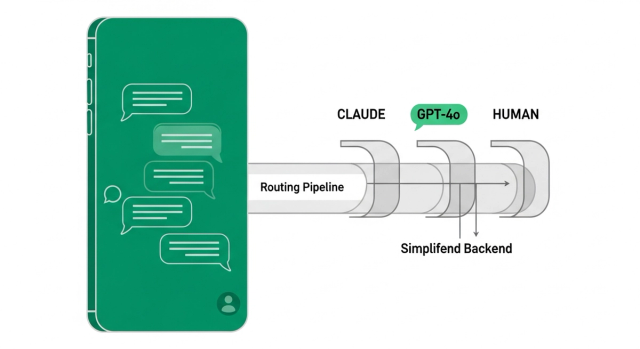
WhatsApp AI Chatbot Build Guide: From WhatsApp Cloud API to Production (2026)
Build a production WhatsApp AI chatbot in 6 days — WhatsApp Cloud API webhook handler, Claude prompt template, escalation flow, cost-per-message math, and the rollback plan we actually use.
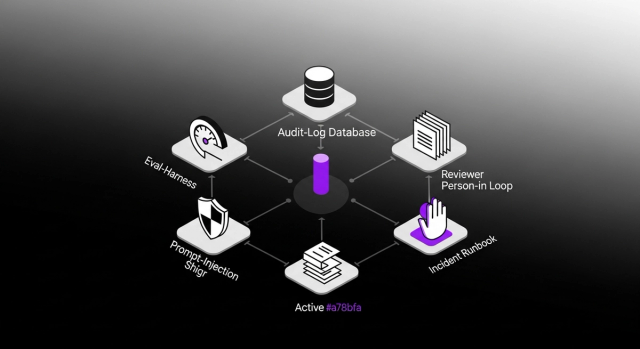
What Is Responsible AI? An Operator's Definition + 6 Controls We Install
Responsible AI in production is 6 specific controls — eval harness, audit log, prompt-injection defense, reviewer-in-loop, model card, incident runbook. Frameworks tell you what; this is how.